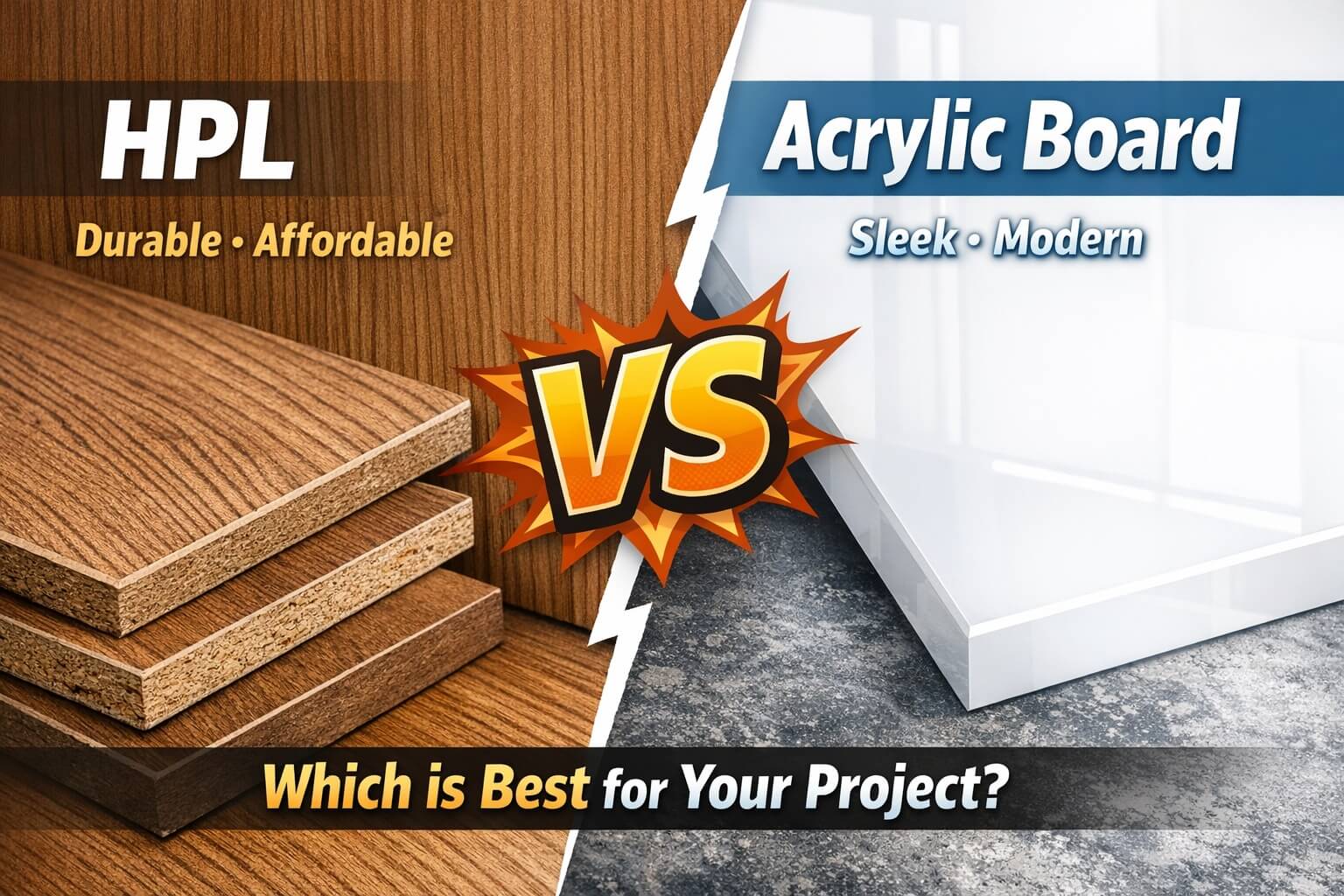
When it comes to selecting materials for various applications, from furniture and cabinetry to signage and decorative panels, you’ll often encounter High-Pressure Laminate (HPL) and acrylic board. While both are high-performance plastics used in a variety of applications, they are fundamentally different in composition, durability, and aesthetic appeal. Both offer unique advantages and disadvantages, and understanding these differences is crucial for making the best choice for your specific project. We’ve analyzed the key characteristics of both materials to help you decide which one is the perfect fit for your next project.
High-Pressure Laminate (HPL)
HPL stands for High-Pressure Laminate. It is a durable surfacing material created by layering multiple sheets of kraft paper (impregnated with phenolic resin) along with a decorative paper layer and a protective melamine overlay. These layers are fused together under extreme heat and high pressure (over 1,000 PSI), resulting in a tough, rigid, dense and incredibly hard sheet typically 0.6mm to 1.5mm thick (or thicker for compact panels). HPL sheets are usually bonded to a substrate like plywood, MDF, or particleboard to create “HPL boards” used in everyday applications. You might also hear it referred to by brand names like Greenlam, which is a world-class HPL manufacturer.
Key Characteristics of HPL:
- Durability and Scratch Resistance: HPL is renowned for its exceptional durability and resistance to scratches, impacts, and abrasions. This makes it an excellent choice for high-traffic areas and surfaces that experience a lot of wear and tear.
- Heat Resistance: It generally offers good heat resistance, making it suitable for kitchen countertops and other applications where moderate heat exposure might occur.
- Moisture Resistance: While not entirely waterproof, HPL offers good resistance to moisture, especially on its surface. Edges need to be properly sealed to prevent water ingress.
- Design Versatility: HPL comes in an astonishing array of colors, patterns, and finishes, including woodgrains, stone effects, metallics, and solid colors. This wide variety allows for immense design flexibility.
- Cost-Effective: Compared to some solid surface materials, HPL is often a more budget-friendly option, offering a high-end look without the premium price tag.
- Applications: Commonly used for kitchen countertops, wall cabinets, office furniture, wall cladding, doors, and retail displays.
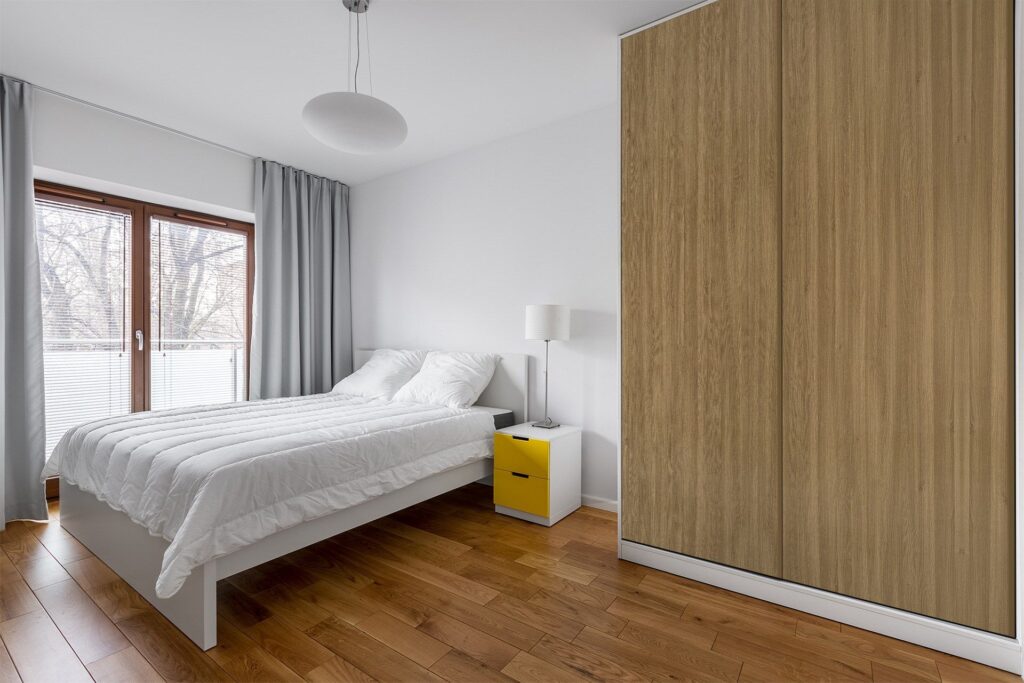
Here’s an example of an HPL board with a woodgrain finish.
Acrylic Board
Acrylic, chemically known as PMMA (Polymethyl Methacrylate), is a pure plastic. Often known by brand names like Perspex® or Plexiglas, it is a thermoplastic derived from acrylic acid. It is available in two main forms: extruded (for general-purpose use) and cast (which offers higher strength and better chemical resistance). In furniture and interiors (especially in places like Bangladesh and India), “acrylic board” commonly means acrylic-finished panels: a thin acrylic layer (high-gloss, mirror-like) applied over a substrate like plywood or MDF. Pure acrylic sheets are used for signage, tabletops, displays, and transparent elements, while acrylic-laminated boards are used for cabinetry and furniture for their ultra-glossy, premium appearance.
Key Characteristics of Acrylic Board:
- Transparency and Clarity: One of acrylic’s most significant advantages is its exceptional optical clarity, often surpassing that of glass. It allows light to pass through with very little distortion.
- Lightweight: Acrylic is significantly lighter than glass, making it easier to handle, transport, and install.
- Impact Resistance: It is much more impact-resistant than glass, making it a safer option where breakage is a concern. It tends to shatter into larger, duller pieces if broken, rather than sharp shards.
- Weatherability: Acrylic has excellent resistance to weathering, UV radiation, and temperature changes, making it suitable for outdoor applications without yellowing or degrading significantly over time.
- Formability: When heated, acrylic can be easily molded, bent, and thermoformed into various shapes, offering great design flexibility for custom applications.
- Glossy Finish: Acrylic typically has a high-gloss, sleek appearance, which can add a modern and sophisticated touch to designs.
- Applications: Commonly used for signage, display cases, aquariums, skylights, protective barriers, furniture components, and artistic installations.
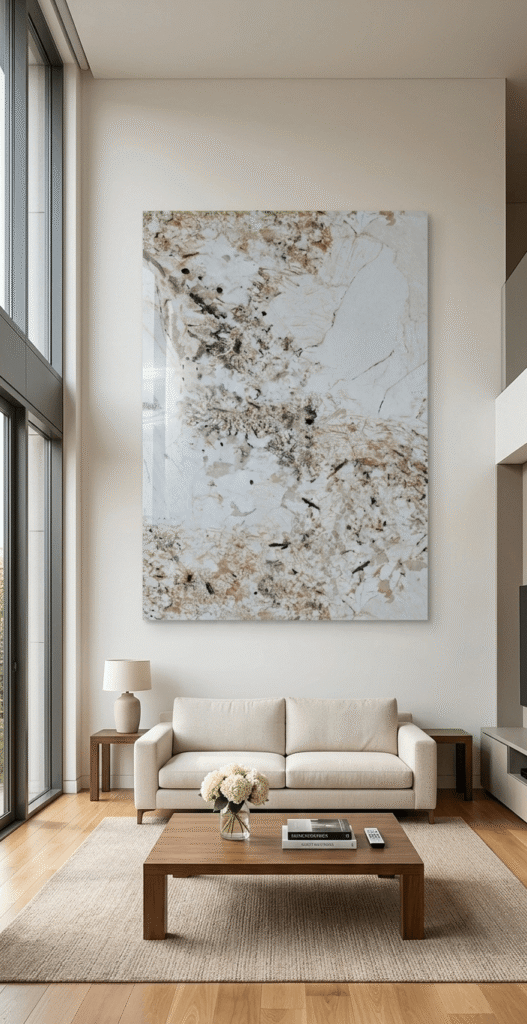
Below is an image showcasing the clarity and versatility of acrylic sheets.
Key Differences Between HPL Board and Acrylic Board
Here’s a side-by-side comparison based on common performance factors in interior and furniture use:
Composition:
HPL: Multi-layer resin-impregnated paper and kraft, thermoset under high pressure. Acrylic: Polymer-based plastic (PMMA), either in solid sheets or as a high-gloss finish layer on a substrate.
Appearance & Finish
HPL: Wide variety such as matte, textured, woodgrain, solid colors, and glossy. Less reflective unless a high-gloss variant.
Acrylic: Mirror-like high-gloss, deep reflective shine that makes spaces look larger and more luxurious.
Durability & Scratch Resistance
HPL: Generally higher surface hardness (5H–6H), excellent abrasion resistance (2000+ cycles), and impact resistance. Handles daily wear well.
Acrylic: Medium hardness (2H–3H), more prone to scratches and fingerprints, but excellent UV resistance and color stability.
Heat & Temperature Resistance
HPL: Better withstands up to 140°C.
Acrylic: Limited (around 80°C); can warp or deform near heat sources like stoves.
Moisture & Water Resistance
Both are excellent when properly sealed, but HPL often edges out in high-humidity areas.
Maintenance
HPL: Easy to clean, resists stains and chemicals well, and has fewer visible fingerprints.
Acrylic: Shows fingerprints, smudges, and dust easily; needs frequent wiping with a soft cloth and mild cleaner.
Thickness & Structural Use
HPL: Thin laminate sheet applied to substrate; compact HPL (thicker self-supporting panels) available for partitions.
Acrylic: Sheets range from 1mm to 20mm+ for signage; acrylic-finished boards rely on the substrate for strength.
Cost
HPL: More affordable and cost-effective for large areas.
Acrylic: Known for premium pricing, often significantly more expensive due to the high-end finish.
Applications
HPL: Countertops, kitchen cabinets, furniture, wall panels, high-traffic commercial surfaces, signage backs.
Acrylic: High-end kitchen cabinets, wardrobes, modern furniture fronts, display cases, signage (especially illuminated), decorative panels.
Which One Should You Choose?
- Choose HPL if your project demands maximum durability, scratch resistance, and low maintenance. It is the ideal choice or perfect for busy kitchens, public areas, commercial furniture, or high-use areas and outdoor cladding where you need a material that can withstand impacts, heat, and heavy use without showing wear.
- Choose Acrylic if you want an aesthetic, specifically transparency or an ultra-deep, high-gloss finish and contemporary look with that reflective, glossy finish. You want a material that looks like glass but is safer and lighter; acrylic is unmatched. Acrylic is ideal for premium modular kitchens, wardrobes, or statement pieces where aesthetics take center stage (and you’re okay with extra cleaning).
Many designers combine both. Ultimately, both HPL and acrylic are excellent materials. HPL for countertops and functional surfaces, acrylic for cabinet doors and visible fronts. Both materials continue to evolve, with innovations like scratch-resistant acrylic coatings and ultra-gloss HPL bridging the gap. Your final decision depends on your budget, usage, and style preference.
Applications: Where Do They Shine?
Given their distinct properties, HPL and acrylic are suited for different roles.
HPL is the workhorse. Its durability means it is often specified for:
Exterior Cladding: Balcony panels and building facades.
High-Use Interiors: Kitchen countertops, laboratory surfaces, and cabinet doors in busy family homes or rentals.
Public Spaces: Wall panels in airports, schools, and hospitals where hygiene (even with antibacterial coatings) and impact resistance are key.
Acrylic is the showpiece. Its beauty and optical properties make it perfect for:
Signage and Displays: Lightboxes, illuminated signs, retail displays, and point-of-purchase units.
Architectural Glazing: As a safer, lighter alternative to glass in windows, balustrades, and balcony cladding, where preserving the view is important.
Bathroom Furniture: Bath tubs, shower trays, and washbasins, where their warm feel and repairability are valued.
High-End Interiors: High-gloss furniture fronts and decorative elements.
Final Thoughts:
Both materials continue to evolve, with innovations like scratch-resistant acrylic coatings and ultra-gloss HPL bridging the gap. Your final decision depends on your budget, usage, and style preference.
Have you used HPL or acrylic in your projects? Which do you prefer and why? Share in the comments below. For personalized advice on suppliers in Bangladesh or design ideas, feel free to reach out.